
Last updated September 10, 2026
Level 1 sweep and inspection to the NFPA 211 annual standard - flue, crown, cap, and flashing checked and photographed
Chimney sweep logs do not sweep chimneys. They loosen some creosote - which then falls where a brush and vacuum still have to collect it.
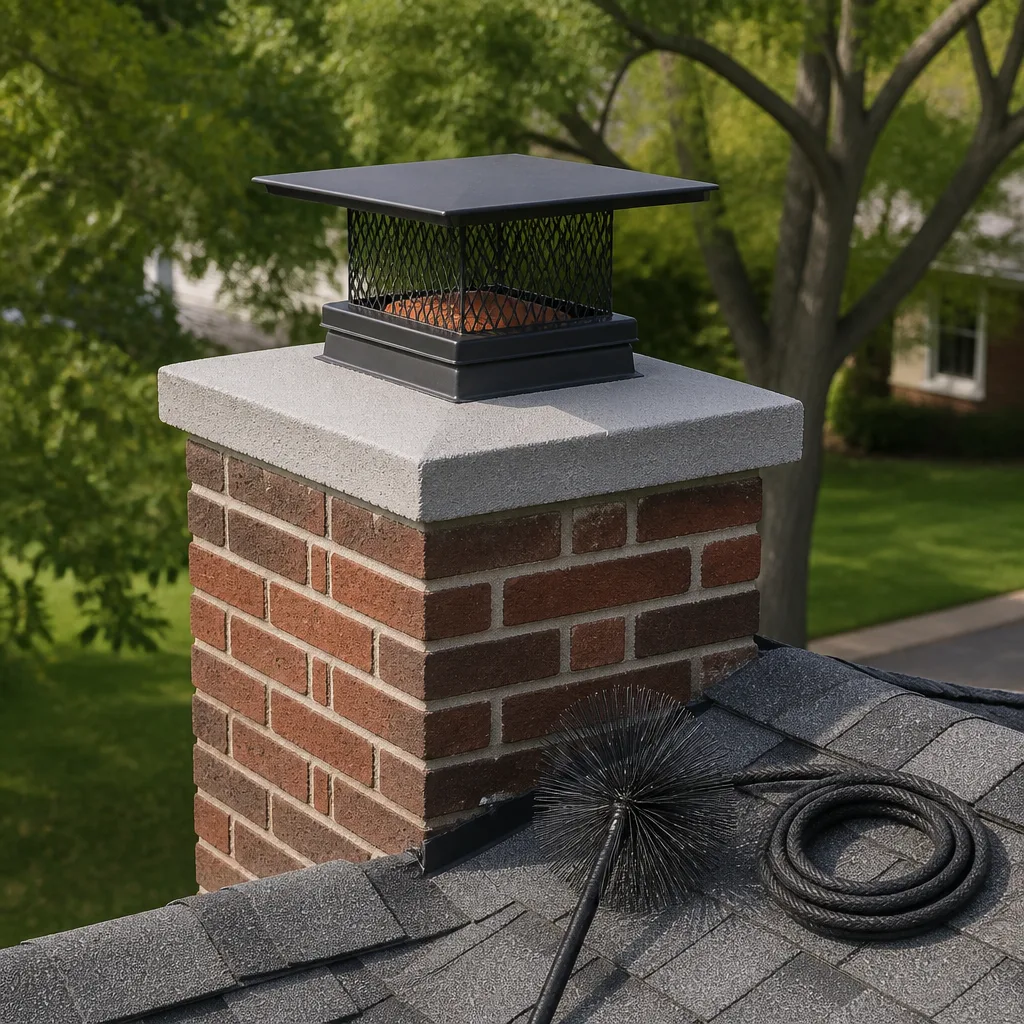
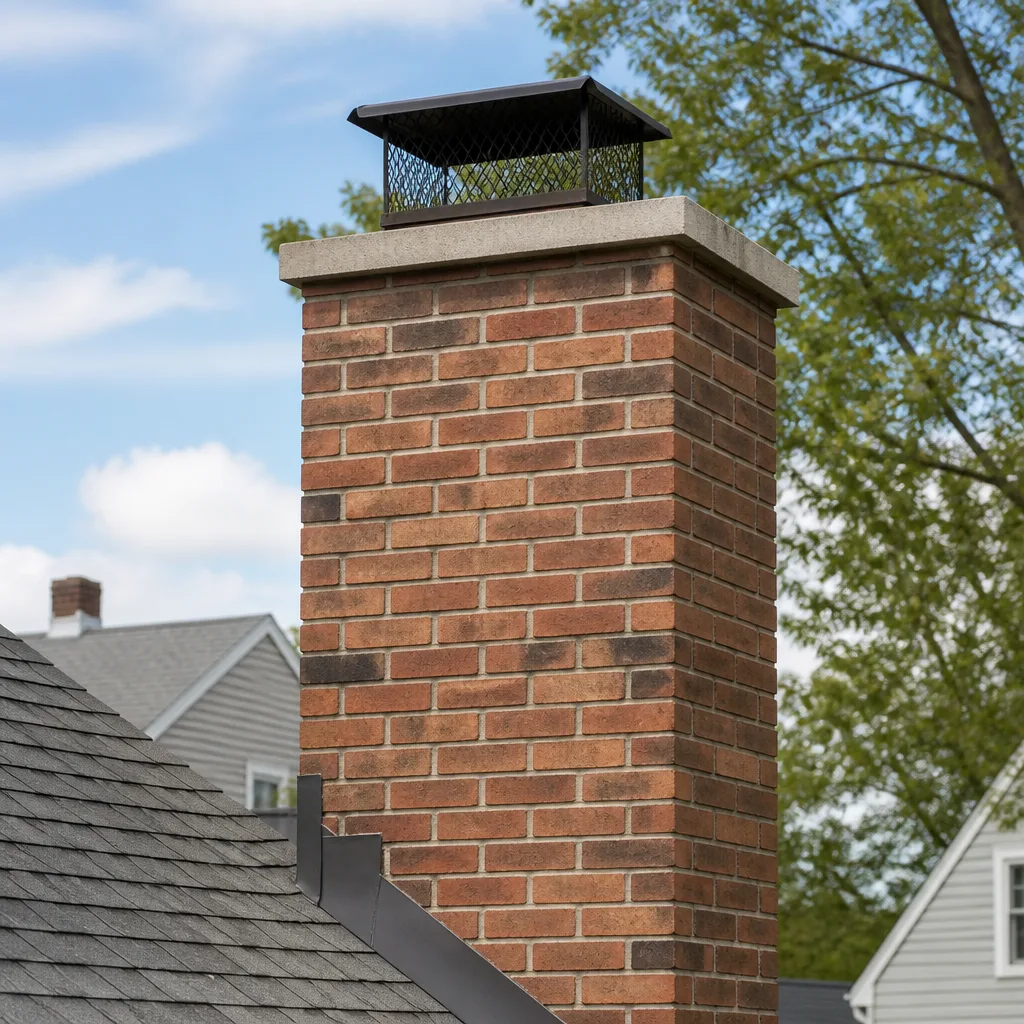
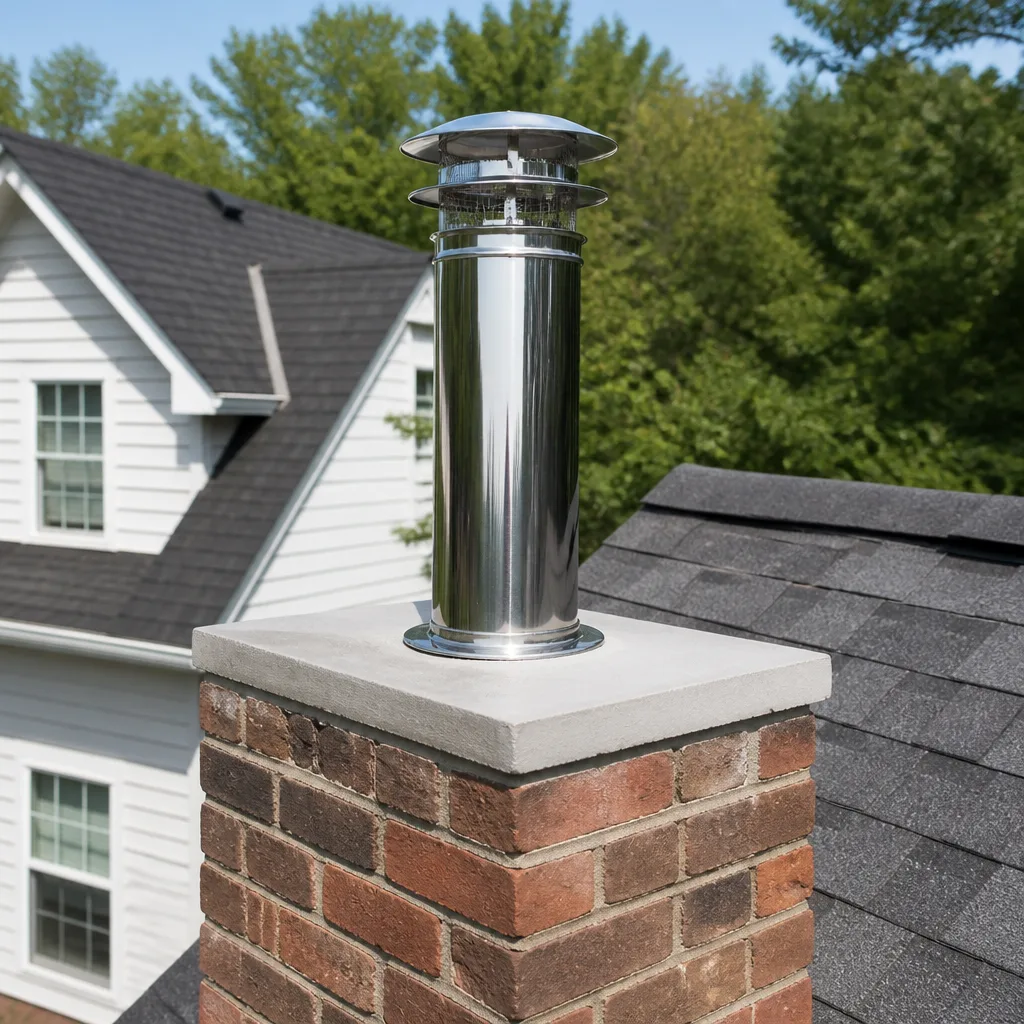
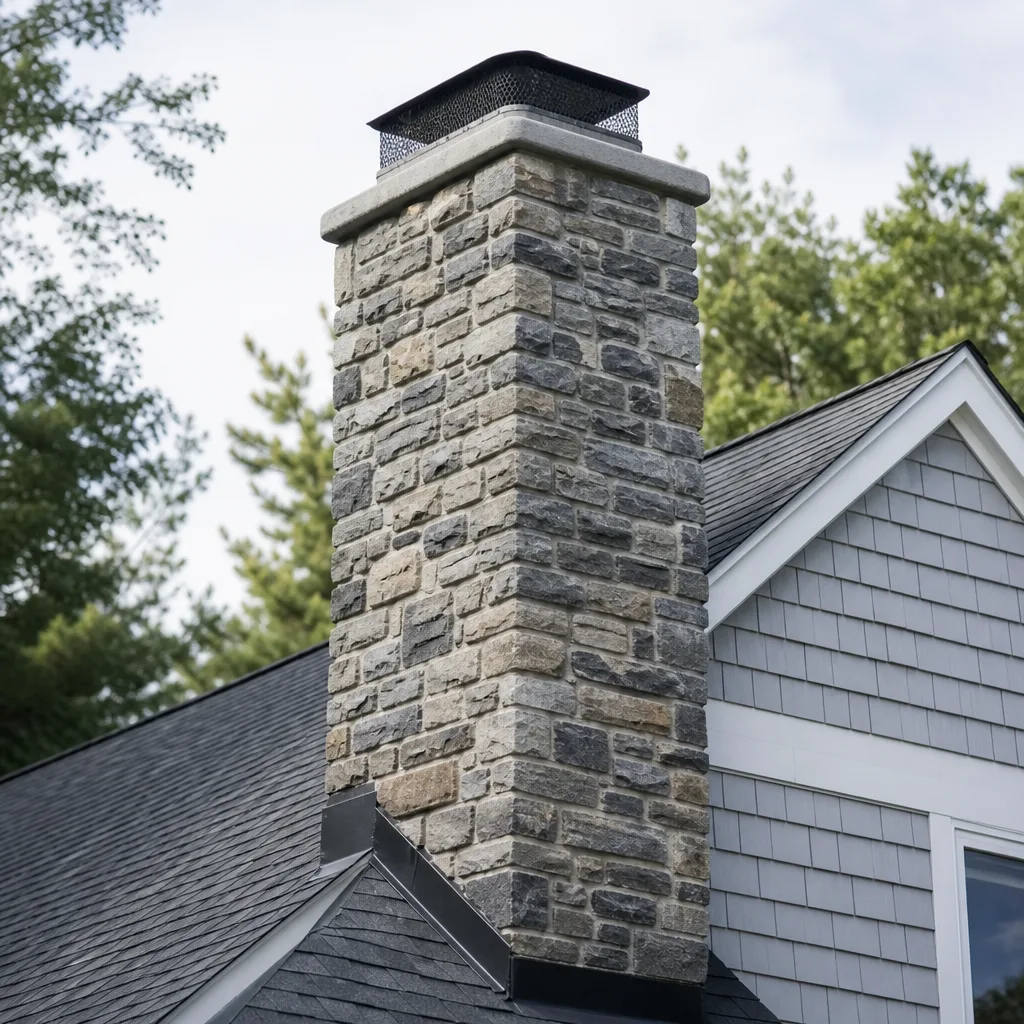
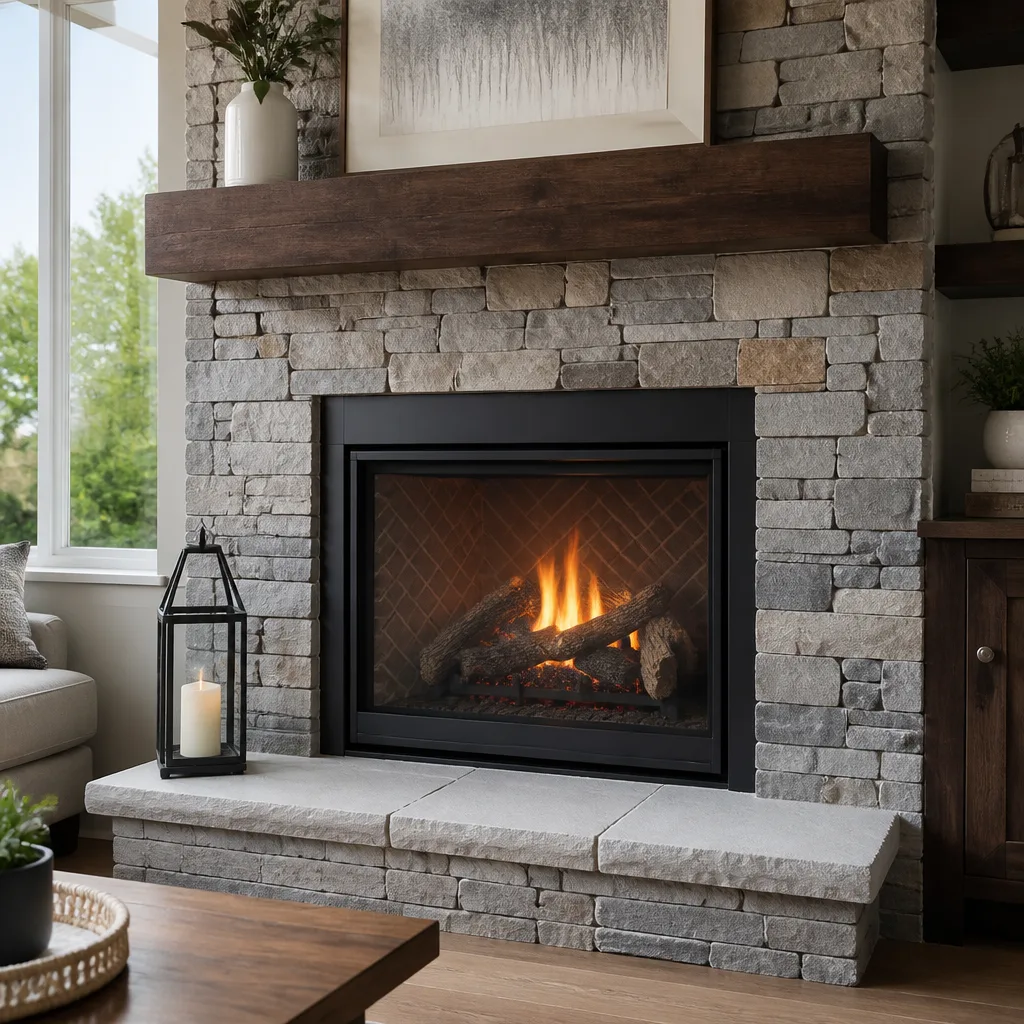
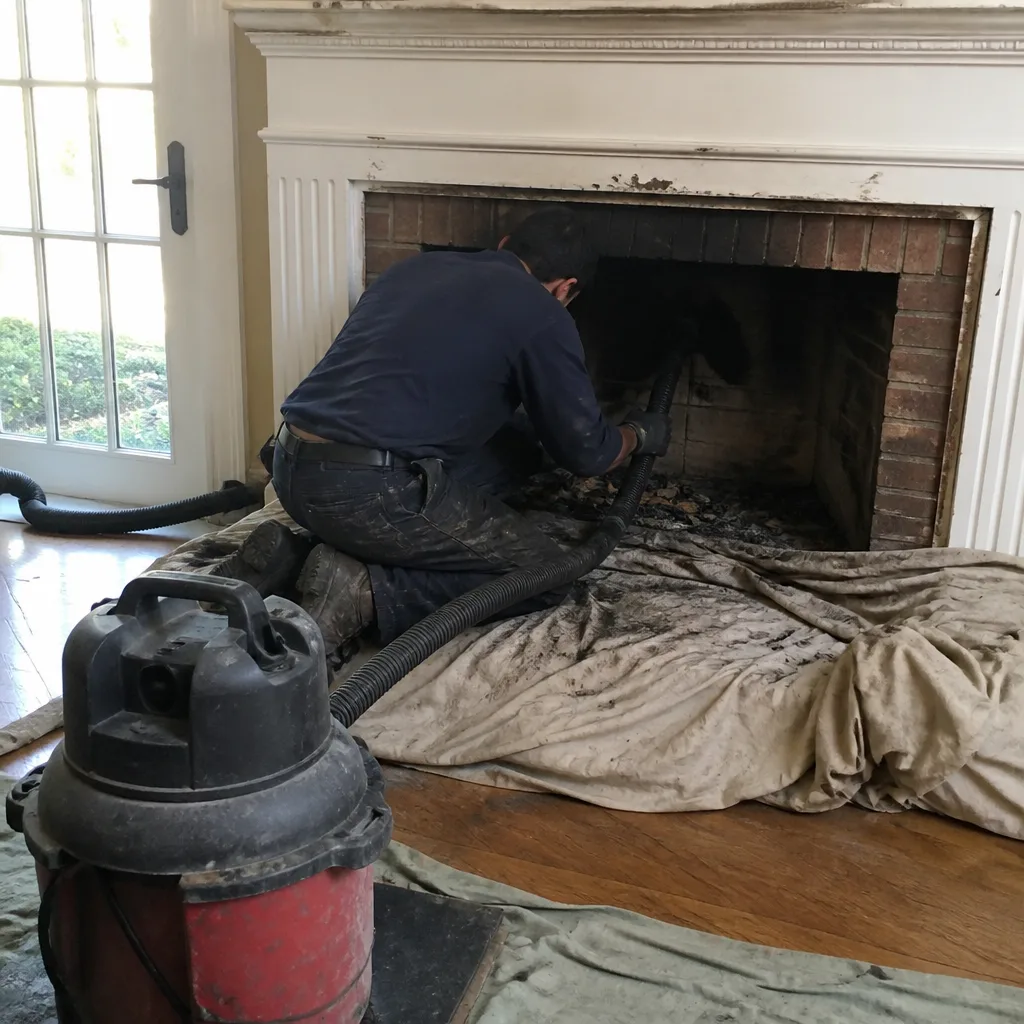 Before
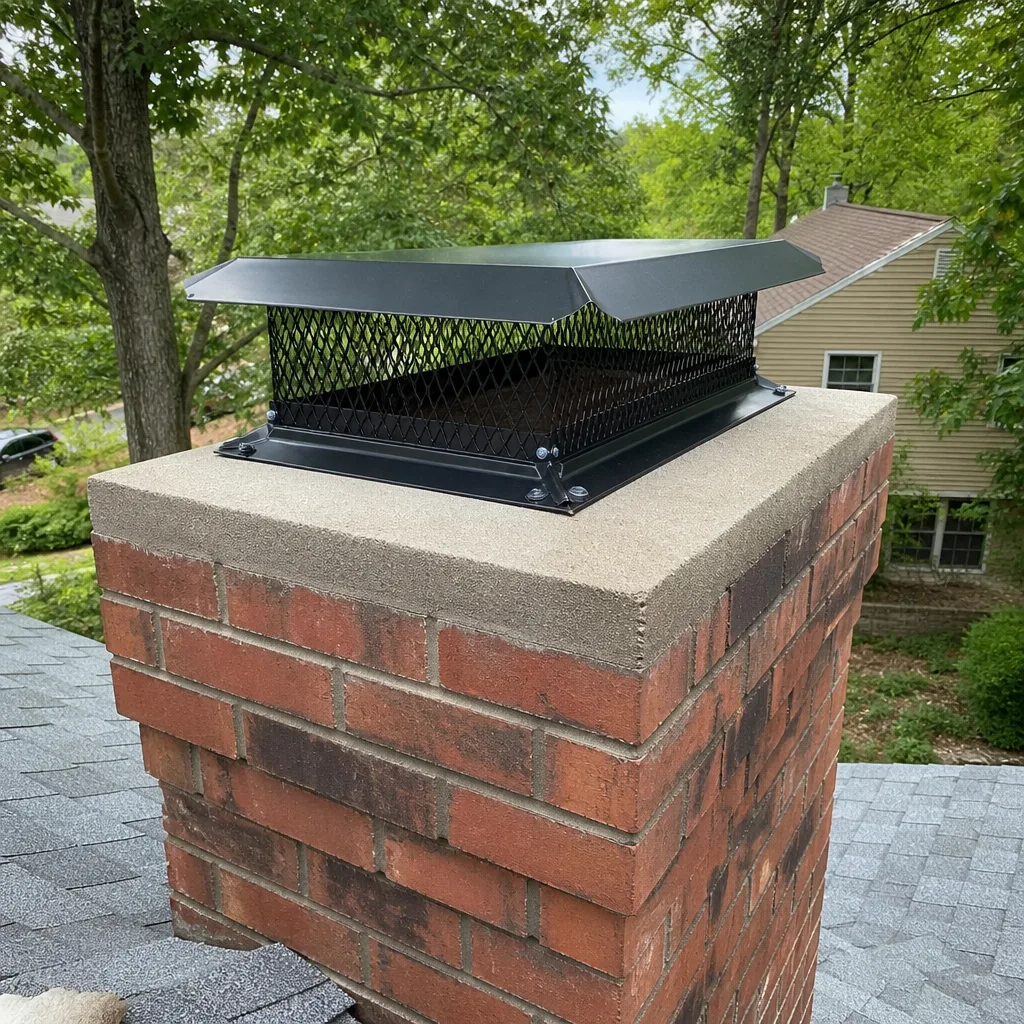 After
After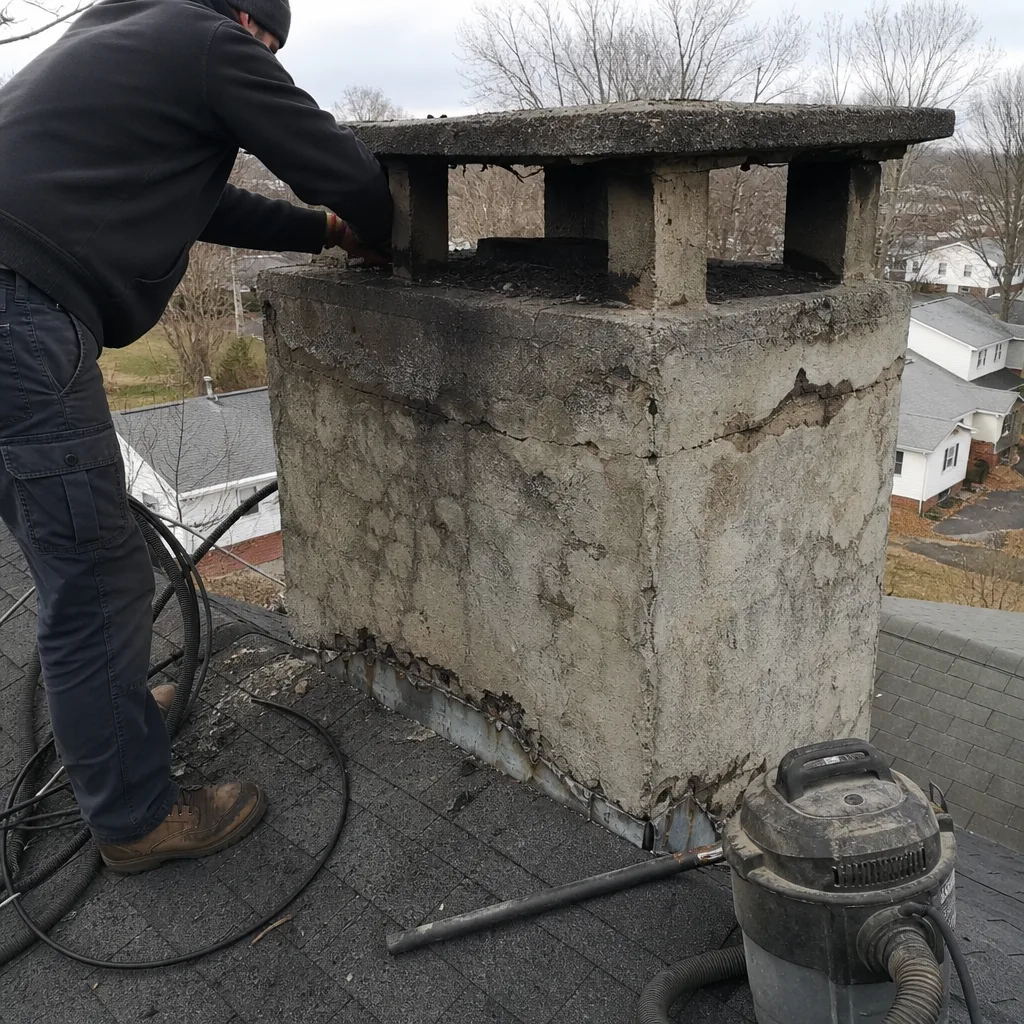 Before
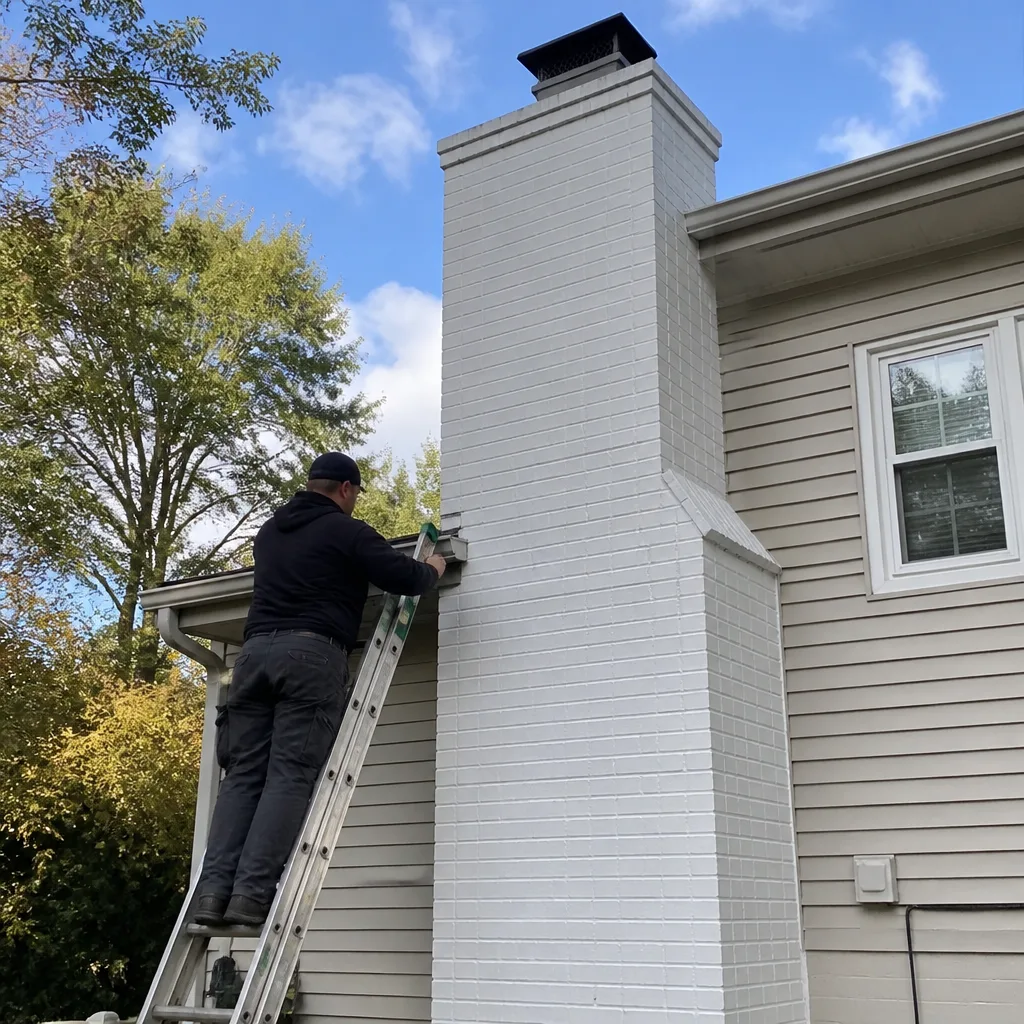 After
After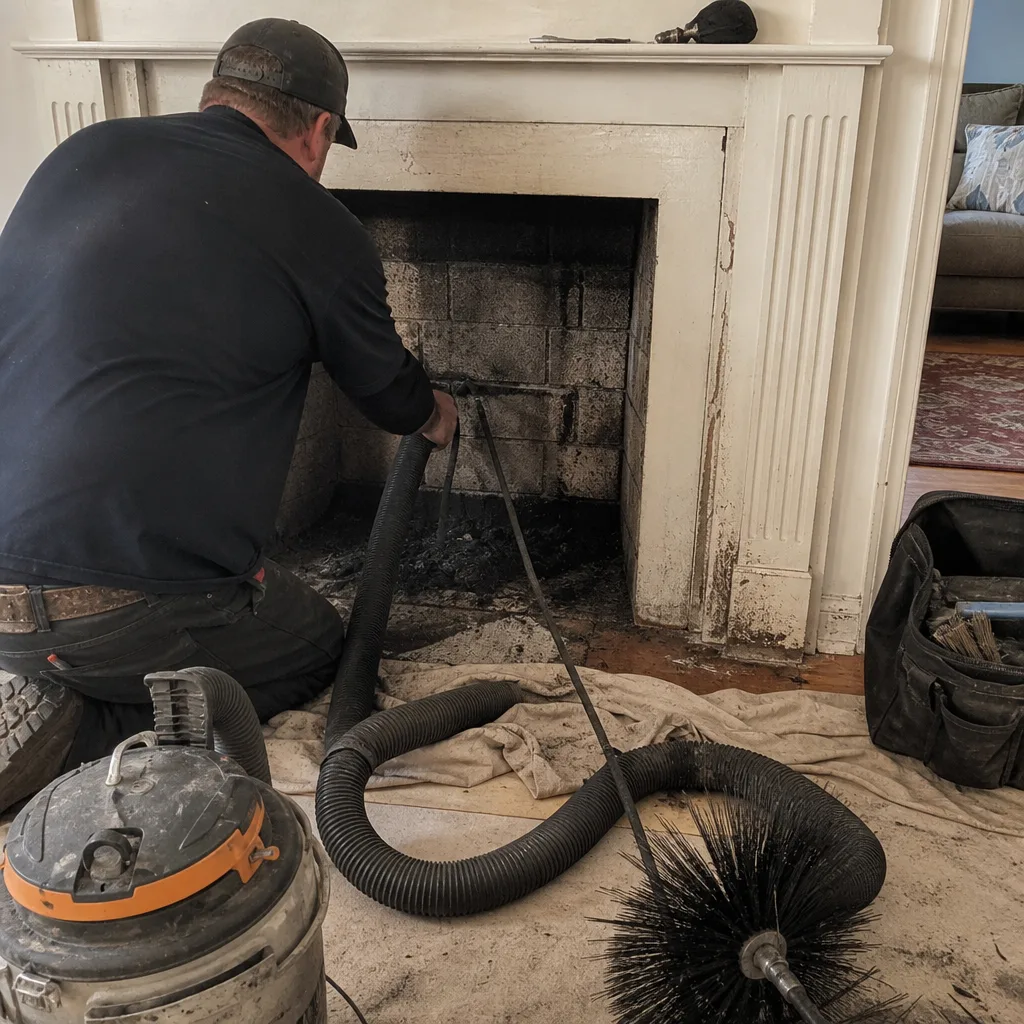 Before
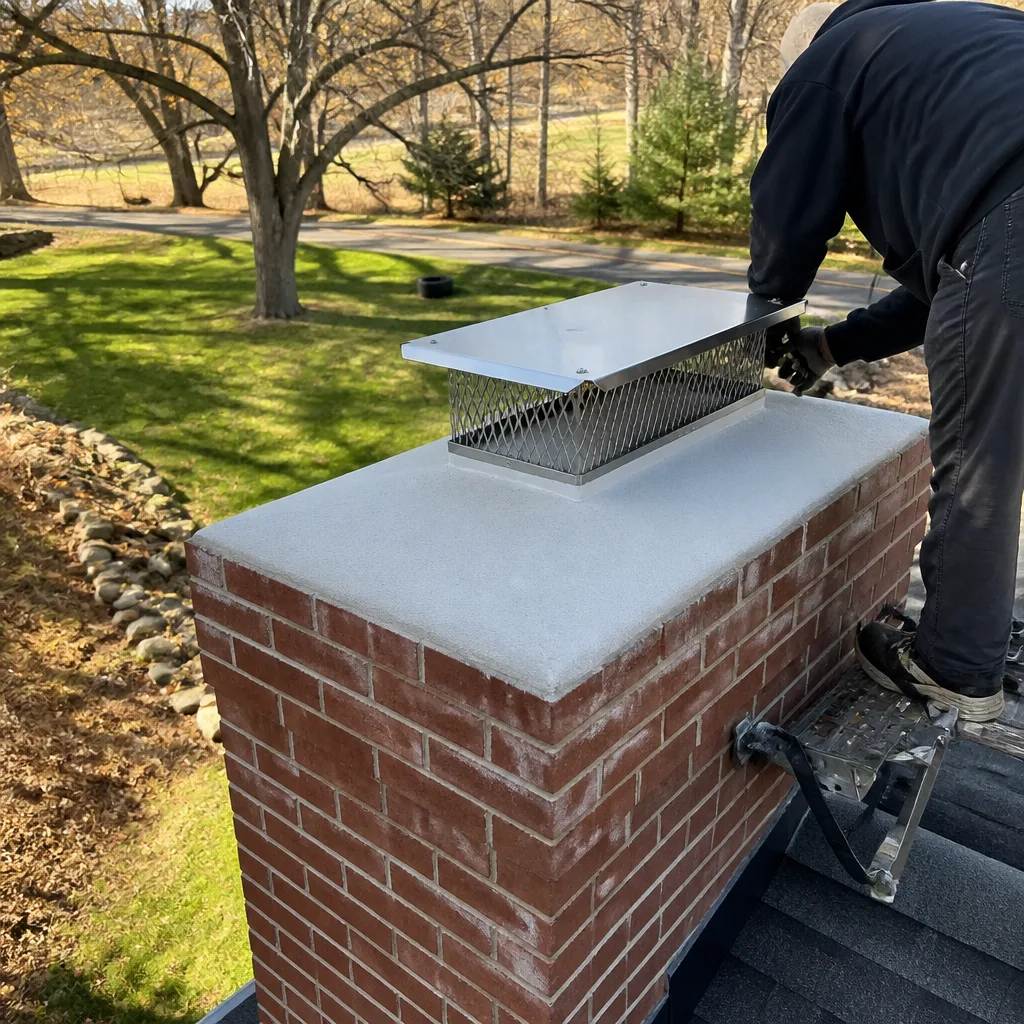 After
AfterChimney Cleaning Permits, Codes & Inspections in VA: What You Need to Know
Here’s the counterintuitive truth that costs Virginia homeowners thousands at closing: you don’t need a permit to have your chimney swept, but if that sweep discovers damage and a contractor performs what the state considers a “repair” without pulling the proper permit, you become legally liable for unpermitted work. In Lynchburg and the surrounding Campbell and Amherst county jurisdictions, we’ve seen this scenario derail home sales, trigger re-inspection fees, and force homeowners to pay twice for work that should have been documented correctly the first time. This guide explains exactly where Virginia law draws the line between cleaning and repair, which code sections govern your fireplace, and how to protect yourself with paperwork that holds up to scrutiny; for step-by-step maintenance advice, see our Chimney Cleaning & Sweep Maintenance Checklist for Lynchburg Homeowners.
Quick Answer
Chimney cleaning itself does not require a permit in Virginia under any jurisdiction we service. However, chimney liner replacement, crown rebuilding, firebox repair, and any modification to clearances or appliance connections trigger permit requirements under the Virginia Mechanical Code and most local amendments. For homeowners in Lynchburg, Campbell County, and Amherst County, the safest approach is to hire a sweep who documents findings with photos and can coordinate permitted repairs when needed, keeping your documentation clean for resale; learn what to watch for in our Chimney Cleaning Warning Signs: A Lynchburg Homeowner’s Reference Guide.
Table of Contents
- Virginia’s Chimney Codes Explained
- When Cleaning Becomes Repair: The Permit Trigger
- How NFPA 211 Interacts with Virginia Law
- What Lynchburg Inspectors Actually Check
- Protecting Yourself at Resale
- The Documentation Checklist Every Homeowner Needs
- Choosing a Contractor Who Handles Codes Correctly
- Common Mistakes to Avoid
Virginia’s Chimney Codes Explained
Virginia operates under a statewide building code framework with local amendments, and chimney work falls at the intersection of three regulatory layers: the Virginia Residential Code (VRC), the Virginia Mechanical Code (VMC), and the Virginia Statewide Fire Prevention Code. Understanding which layer applies to your situation prevents both unnecessary permits and dangerous gaps in compliance.
The Virginia Residential Code Section R1001 governs factory-built and masonry fireplaces, including clearance requirements to combustibles, hearth extensions, and chimney height above rooflines. For Lynchburg homeowners in older neighborhoods like Rivermont, Diamond Hill, or Boonsboro, this section matters because many homes built before 1990 have fireplace configurations that met code at construction but would fail under current standards if modified. We’ve inspected chimneys in Randolph College-adjacent homes where original clearances were grandfathered, but any repair that disturbs the surrounding structure triggers current-code compliance.
The Virginia Mechanical Code Section 801 and Section 803 address chimney connectors, venting systems, and appliance-specific requirements. This is where gas fireplace inserts, pellet stoves, and wood-burning appliance installations live. Section 801.18 specifically addresses chimney lining requirements, stating that chimneys shall be lined in accordance with their listed design or with a lining system evaluated for the intended appliance. In practical terms, this means an unlined masonry chimney cannot legally receive a new wood-burning appliance without proper lining, a fact that some low-cost installers in the Lynchburg market gloss over.
The Virginia Statewide Fire Prevention Code adopts NFPA 211 by reference, which brings us to the next section’s critical interaction. Local amendments in Lynchburg City, Campbell County, and Amherst County generally mirror the state codes with minor variations in enforcement procedures rather than technical requirements. Campbell County requires permits for chimney liner replacement when the appliance connection changes; Lynchburg City requires permits for any crown reconstruction exceeding 25% of surface area; Amherst County follows state minimums but has been increasingly strict about documentation for insurance claims after chimney fires.
Key code sections to know:
- VRC R1001.9: Chimney and fireplace clearance to combustibles - minimum 2 inches, with specific exceptions for listed assemblies
- VRC R1003.11: Chimney cleanout requirements - must be accessible and properly sized
- VMC 801.18: Chimney lining requirements for all fuel-burning appliances
- VMC 803.3: Connector pass-through requirements for manufactured homes and specific dwelling types
- NFPA 211 (adopted by reference): Annual inspection requirements, clearance standards, and maintenance protocols
The climate factor most homeowners miss: Lynchburg’s position in the Piedmont, with freeze-thaw cycles from late October through April, accelerates masonry deterioration that code inspectors flag aggressively. A crown with hairline cracks in October often becomes a spalled, leaking surface by March. Code compliance isn’t static here; it’s a moving target shaped by weather patterns that Central Virginia’s chimney professionals track closely.
When Cleaning Becomes Repair: The Permit Trigger
This distinction is where expensive surprises originate. Virginia jurisdictions uniformly classify chimney sweeping as maintenance, not construction. No permit required. But the moment work crosses into structural modification, component replacement, or appliance reconnection, permitting thresholds activate. The problem: the line is blurrier than most homeowners realize, and some contractors exploit that ambiguity to avoid permit fees and inspection delays.
Here’s how Lynchburg-area jurisdictions typically classify the boundary:
- Maintenance (no permit): Removal of combustible deposits (creosote, soot), minor crown sealant application without structural alteration, cap replacement using existing fasteners, damper adjustment, firebox brick repointing under 10% of surface area
- Repair (permit typically required): Chimney liner installation or replacement, crown reconstruction exceeding 25% surface area, firebox rebuild exceeding 10% of surface area, smoke chamber parging, clearance modification to meet current code, appliance conversion (wood to gas, or vice versa), chimney extension or height modification
The scenario we encounter regularly in Lynchburg’s older housing stock-a homeowner books a “cleaning and inspection”-is covered in depth in The Complete Guide to Chimney Cleaning in Lynchburg. During the Level-2 camera inspection, we discover a deteriorated clay liner with gaps between flue tiles. The homeowner reasonably wants this addressed. If the sweep installs a stainless steel liner, that’s a repair requiring permit in Campbell County and Lynchburg City. If the sweep performs this work without permitting, the homeowner receives no inspection sign-off, no documentation for insurance or resale, and assumes liability if the installation proves defective.
We’ve been called to second-opinion inspections in Forest, Rustburg, and Madison Heights where unpermitted liner work was discovered during pre-listing inspections. The homeowner paid $1,800-$2,400 for work that now needed to be permitted retroactively (cost: $300-$500 in fees) or redone entirely. In one Madison Heights case, the original contractor had used a flexible liner rated for gas service only in a wood-burning application, a dangerous mismatch that a proper inspection would have caught.
The permit process itself is straightforward in our jurisdictions: submit application with scope description, pay fee ($45-$150 depending on jurisdiction and scope), schedule inspection, receive sign-off. The delay is typically 3-7 business days. Reputable contractors in the Lynchburg market build this timeline into project scheduling; those who don’t are either inexperienced or deliberately avoiding scrutiny.
Our practice at Hearthstone Chimney Co. home: every inspection includes photo documentation and a written verdict that explicitly states whether discovered conditions trigger permit requirements. If they do, we coordinate permitting as part of our repair proposal. No surprises, no shortcuts.
How NFPA 211 Interacts with Virginia Law
The National Fire Protection Association’s Standard 211, “Chimneys, Fireplaces, Vents, and Solid Fuel-Burning Appliances,” is incorporated by reference into Virginia’s fire prevention code. This matters because NFPA 211 establishes the inspection and maintenance standards that Virginia courts and insurance adjusters use to evaluate whether chimney work was performed to accepted professional standards.
NFPA 211 contains three inspection levels, and understanding them clarifies what Virginia homeowners should actually receive:
- Level 1 Inspection: Visual examination of readily accessible portions - appropriate for annual maintenance when no changes have occurred to the system or appliance. This is what a basic “chimney sweep” often includes.
- Level 2 Inspection: Visual examination plus accessible portions in attics, crawl spaces, and basements; video scanning of internal flue surfaces. Required upon sale or transfer of property, after chimney fire or seismic event, or when any change is made to the system. This is our standard for every Lynchburg-area inspection because it provides documentation that holds up to any scrutiny.
- Level 3 Inspection: Destuctive examination when concealed hazards are suspected - removal of components to access hidden areas. Rarely needed but essential when serious defects are suspected.
Virginia law does not mandate which level of inspection homeowners obtain annually. However, NFPA 211’s Level 2 standard becomes legally significant in three Lynchburg-area contexts: real estate transactions, insurance claims after chimney fires, and wrongful death or injury litigation. We’ve testified in Campbell County proceedings where the difference between Level 1 and Level 2 inspection documentation determined liability allocation.
The practical implication for wood-burning fireplace owners: Virginia’s climate, with its humid summers and freeze-thaw winters, creates conditions that Level 1 inspections routinely miss. We’ve found deteriorated flue liners in Boonsboro homes that appeared sound from the firebox but showed catastrophic gaps in the attic run, visible only with camera inspection. NFPA 211 Level 2 catches these; Level 1 does not.
NFPA 211 also establishes clearance standards that frequently surprise homeowners. Section 11.2 requires 2-inch clearance between masonry chimneys and combustible materials, but many Lynchburg homes built in the 1960s-1980s used 1-inch or even direct-contact framing in chase construction. These installations are grandfathered until modified, but any repair that exposes or alters the chase triggers current-code compliance, a costly revelation if unanticipated.
The brands we specify for liner and component work, Gelco and Olympia Chimney, carry listings that satisfy NFPA 211’s requirement for tested, labeled materials. Using unlisted components, or components listed for a different application, violates both the standard and Virginia’s adopted codes. We’ve encountered “savings” proposals from other Lynchburg-area contractors using generic flexible liners without proper UL listings; these create liability exposure that no homeowner should accept.
What Lynchburg Inspectors Actually Check
Having accompanied inspectors through hundreds of Lynchburg, Campbell County, and Amherst County re-inspections after chimney liner and repair work, we can describe exactly what they verify. This knowledge helps homeowners understand why proper documentation matters and why cutting corners on installation details creates costly callbacks.
For chimney liner replacements, which represent the most common permitted repair we perform, inspectors systematically verify:
- Liner sizing: The installed liner’s diameter and length must match the appliance’s listed requirements and NFPA 211’s sizing tables. An undersized liner causes drafting problems and creosote accumulation; an oversized liner reduces flue gas velocity, causing condensation and accelerated deterioration. Inspectors carry sizing charts and will measure.
- Top termination: The liner must terminate with a listed cap or termination fitting at proper height above roofline per VRC R1003.9. Lynchburg City inspectors specifically check for minimum 3-foot clearance above roof penetration and 2-foot clearance above any portion of building within 10 feet.
- Bottom connection: The liner-to-appliance connection must use listed adapters, sealed properly, with visible inspection access. Inspectors will physically verify this connection; they do not accept “it’s back there” assertions.
- Insulation: When required for listed liner systems, insulation must be continuous and properly secured. This is frequently botched in DIY or low-bid installations where insulation gaps create hot spots in the masonry enclosure.
- Clearance documentation: For manufactured chimneys or chase enclosures, inspectors require manufacturer’s installation instructions on-site, with highlighted clearance specifications. We’ve seen inspections fail because the contractor left instructions in the truck.
Campbell County’s inspection protocol includes a specific check we rarely see elsewhere: verification that the liner manufacturer’s installation instructions have been followed for the exact product model installed, not a similar product from the same brand. This stems from a 2019 incident in Timberlake where a generic installation approach caused a liner failure. The county amended its procedures accordingly.
Amherst County inspectors have become particularly rigorous about smoke chamber parging, checking that parge coating thickness and surface smoothness meet NFPA 211’s requirements for proper draft flow. In homes near the Blue Ridge foothills, where wind patterns create unusual draft conditions, this scrutiny has prevented performance problems we’ve seen in neighboring jurisdictions with less rigorous enforcement.
The inspection fee in Lynchburg City is $75 for chimney liner replacement; Campbell County charges $95; Amherst County charges $65. Failed inspections require re-inspection at full fee. Proper preparation by an experienced contractor eliminates this waste. In our experience, inspections we coordinate pass on first visit 97% of the time; industry-wide first-pass rates in our market hover closer to 80%.
Protecting Yourself at Resale
Virginia’s residential real estate disclosure requirements, combined with increasingly thorough buyer inspections, make chimney documentation a critical resale consideration. The standard Virginia Residential Property Disclosure Act requires sellers to disclose known defects in “heating, cooling, and other mechanical systems,” which courts have interpreted to include fireplaces and chimneys when defects are known or should have been known through reasonable inspection.
The five-year documentation window is the practical standard. Virginia home inspectors, following ASHI and InterNACHI standards, routinely ask about chimney work performed within the last five years. They want to see:
- Permits and inspection sign-offs for any repair or modification work
- Level-2 inspection reports with photo documentation
- Manufacturer’s installation instructions for liners, caps, or inserts
- Warranty documentation for materials and labor
- Maintenance records showing annual sweeping
We’ve consulted with Lynchburg real estate agents in Rivermont, Wyndhurst, and Boonsboro who report chimney documentation issues derailing or delaying closings with surprising frequency. The pattern: homeowner had work done by a low-cost operator who provided a handwritten receipt and no permit documentation. Buyer inspector flags this; buyer’s lender or insurer requires proper documentation; homeowner scrambles to reconstruct records or pays for re-inspection and potential rework.
The Lynchburg market’s demographic profile amplifies this risk. Many homes in desirable neighborhoods like Peakland, Fairview Heights, and College Hill were built between 1920 and 1960, with original masonry chimneys that have undergone multiple modifications over decades. Ownership histories are long; documentation is often sparse. A seller who has lived in a Boonsboro home for thirty years may genuinely not know whether a liner was installed, when, or by whom.
Our recommendation for any homeowner planning to sell within five years: obtain a current Level-2 inspection with photo documentation now. If work is needed, have it performed with proper permitting and retain all records in a dedicated file. This upfront investment, typically $200-$400 for inspection and documentation, prevents the $2,000-$5,000 surprises that emerge during pre-listing preparation.
For homeowners not planning to sell, this documentation still matters for insurance claims. We’ve assisted Lynchburg-area clients with claims after chimney fires where the insurer’s first request was for five years of maintenance records and any repair documentation. Clients with organized records received prompt settlement; those without faced extended investigation and, in two cases, coverage disputes that required professional advocacy.
The Documentation Checklist Every Homeowner Needs
Based on Virginia code requirements, local enforcement practices, and real-world resale experience, here’s the documentation we advise every homeowner to maintain:
Annual Maintenance File
- Level-2 inspection report with dated photos of flue interior, firebox, damper, smoke chamber, and accessible exterior
- Sweeping receipt noting type of deposits removed and any conditions observed
- Technician name and company contact information
Repair/Modification File (retain permanently)
- Building permit application copy
- Permit approval and inspection sign-off documentation
- Written scope of work with materials specified by brand and model
- Manufacturer’s installation instructions for all listed components
- Before and after photographs
- Warranty documentation for materials and labor
- Final invoice with detailed line items
Appliance-Specific File
- Original appliance manual and installation instructions
- Any conversion or modification documentation
- Fuel type change records (critical for insurance)
For Fireplace Services in Lynchburg, we provide clients with organized digital and physical documentation packages that satisfy every requirement we’ve encountered. This is not standard industry practice; most contractors provide a single receipt and expect homeowners to manage the rest. Our view: documentation is part of doing the job right.
Choosing a Contractor Who Handles Codes Correctly
The Lynchburg-area chimney services market includes national franchise operations, independent single-truck sweeps, and established local companies like ours. Code compliance varies dramatically across these categories, and homeowners often cannot distinguish proper practice from shortcuts until problems emerge.
Specific questions to ask any contractor:
- “Will you pull permits for any work that requires them, or is that my responsibility?” The correct answer: “We handle permitting as part of our standard process.” If the contractor deflects or suggests you handle it, this indicates either inexperience or deliberate avoidance of inspection scrutiny.
- “What level of NFPA 211 inspection do you perform as standard?” The correct answer: “Level 2, with video documentation.” Level 1 as standard is insufficient for most Lynchburg-area homes, particularly those over 40 years old.
- “What brands and models of liner and components do you specify?” Vague answers (“stainless steel liner”) or unbranded products are red flags. Specific brands with listed model numbers, like Famco termination fittings or Copperfield components, demonstrate professional sourcing. We specify these brands because their listings satisfy Virginia code requirements and their technical support assists with proper installation.
- “Can you provide documentation that will satisfy a home inspector and my insurance company?” The correct answer is immediate and confident, with examples of prior documentation. Hesitation or “we can try” suggests the contractor has not operated in regulated environments.
- “What happens if your work doesn’t pass inspection?” The correct answer includes specific remediation commitment at no additional cost. Our 90-Day Done Right Promise governs this explicitly: if it’s not right, we make it right, in writing, no arguing.
Red flags we’ve observed in the Lynchburg market: contractors who offer “cash discounts” that bypass documentation; sweeps who perform “inspections” without ever entering the attic or using camera equipment; proposals that describe “liner installation” without specifying product, sizing methodology, or insulation requirements; and any operator who cannot or will not explain which code sections govern their proposed work.
The Chimney Repair in Lynchburg market has attracted some operators who exploit the gap between homeowner knowledge and regulatory complexity. Our approach, developed over 42 years of local service, is to explain the regulatory landscape plainly, document everything, and stand behind our work with guarantees that have real meaning. Russell Haines established this practice when he founded Hearthstone, and it governs every technician we send to homes in Lynchburg, Forest, Rustburg, Madison Heights, and throughout our service area.
Common Mistakes to Avoid
- Assuming all chimney work is “just maintenance.” In Lynchburg’s jurisdiction, liner replacement, crown reconstruction, and firebox repair all trigger permit requirements. Treating these as maintenance creates unpermitted work liability.
- Accepting verbal assurances without written documentation. Virginia’s statute of frauds and practical enforcement both favor written records. A contractor who won’t put scope, materials, and warranty in writing is preparing to disappear.
- Hiring based on lowest price without verifying permit inclusion. Low bids often exclude permit fees ($65-$150) and inspection coordination. The homeowner pays these separately, or worse, the work proceeds unpermitted.
- Neglecting to verify that listed components are used. We’ve found unlisted liner products in Amherst County homes that failed within seven years. The original contractor was unlocatable; the homeowner paid twice.
- Failing to transfer documentation to new owners. If you sell, provide chimney records proactively. Disclosing organized documentation builds buyer confidence and prevents inspection-driven price reductions.
- Skipping annual inspection because “the chimney looks fine.” In Lynchburg’s climate, internal deterioration progresses invisibly. We’ve documented advanced flue tile failure in chimneys with pristine exterior appearance.
- Assuming grandfathered installations protect against all liability. Grandfathering applies to existing conditions, not to new damage or to work performed without proper permits. Unpermitted modifications void grandfathered status.
When to Call a Professional
Call a qualified chimney professional when: your annual inspection is due (NFPA 211 recommends annual Level-2 inspection for all wood-burning systems); you’re purchasing a home and need pre-sale documentation; you’ve experienced a chimney fire, even a minor one; you’re converting fuel types or installing a new appliance; or you’re preparing to sell and need to verify that prior work was properly permitted and documented. In Lynchburg’s variable climate, we also recommend professional evaluation after severe weather events that may have damaged crowns or caps, and whenever you notice performance changes like smoking back into the room, unusual odors, or visible staining on interior walls near the chimney chase.
Hearthstone Chimney Co. offers free estimates in Lynchburg and throughout Campbell and Amherst counties. Our Level-2 inspections include photo documentation you can see and a plain-English verdict you can understand. If work is needed, we handle permitting, specify professional-grade materials, and back every job with our 90-Day Done Right Promise in writing. Call (540) 328-6986 to schedule.
Frequently Asked Questions
No. Chimney sweeping, creosote removal, and routine maintenance do not require permits in any Virginia jurisdiction we serve, including Lynchburg, Campbell County, and Amherst County. However, if inspection reveals conditions requiring liner replacement, crown reconstruction, firebox repair, or clearance modification, those repairs typically trigger permit requirements that a qualified contractor should coordinate.
Level-2 camera inspections in the Lynchburg market typically range from $200 to $350, depending on chimney accessibility and number of flues. Our $89 Seasonal Tune-Up includes basic inspection and sweeping for systems without known issues. For complex systems or real estate transactions, the full Level-2 inspection with photo documentation is the appropriate investment. Call (540) 328-6986 for exact pricing based on your specific chimney configuration.
You become legally liable for disclosure of known defects, and unpermitted work typically qualifies as a known condition that affects value. Virginia buyers increasingly obtain specialized chimney inspections; unpermitted work is routinely flagged, potentially derailing financing, triggering renegotiation, or requiring costly retroactive permitting and inspection. The five-year lookback period is standard for home inspector inquiries.
NFPA 211 recommends annual inspection for all fuel-burning chimney systems. For wood-burning fireplaces in Lynchburg’s climate, with our mix of humid summers and heating-season moisture, annual sweeping is prudent for moderate use (more than twice weekly during season). Gas systems typically require less frequent sweeping but still need annual inspection for venting integrity and debris obstruction. The specific frequency depends on wood type burned, appliance efficiency, and burning practices.
Only if inspection documents specific conditions: cracked or missing flue tiles, unlined masonry flues serving modern appliances, or liners damaged by chimney fire or deterioration. We never recommend liner replacement without camera evidence you can see yourself, and we plainly state when conditions allow monitored delay versus require immediate action. Our estimates include specific measurements and product specifications, not vague “you need a liner” pressure.
Accumulated creosote creates fire hazard; internal deterioration progresses invisibly until failure; and insurance claims may be denied for lack of maintenance documentation. In Lynchburg’s older housing stock, we’ve seen neglected chimneys develop conditions that required $8,000-$15,000 rebuilds that annual maintenance would have prevented. The cost of prevention is modest; the cost of remediation is not. Call (540) 328-6986 to schedule inspection and establish a maintenance record that protects your investment.
The Bottom Line
Virginia’s chimney regulatory framework is navigable but unforgiving of shortcuts. Cleaning requires no permit; repairs frequently do. The distinction matters for liability, insurance, and resale. NFPA 211 and Virginia’s adopted codes provide clear standards, but enforcement and documentation requirements vary by local jurisdiction. Lynchburg-area homeowners protect themselves by hiring contractors who explain these distinctions plainly, document everything with photos and written verdicts, and handle permitting as standard practice rather than an afterthought. The documentation you maintain today prevents the expensive surprises that emerge at the most inconvenient moments, years after the work was performed.
Written by Russell Haines, Owner at Hearthstone Chimney Co., serving Lynchburg since 2014.