
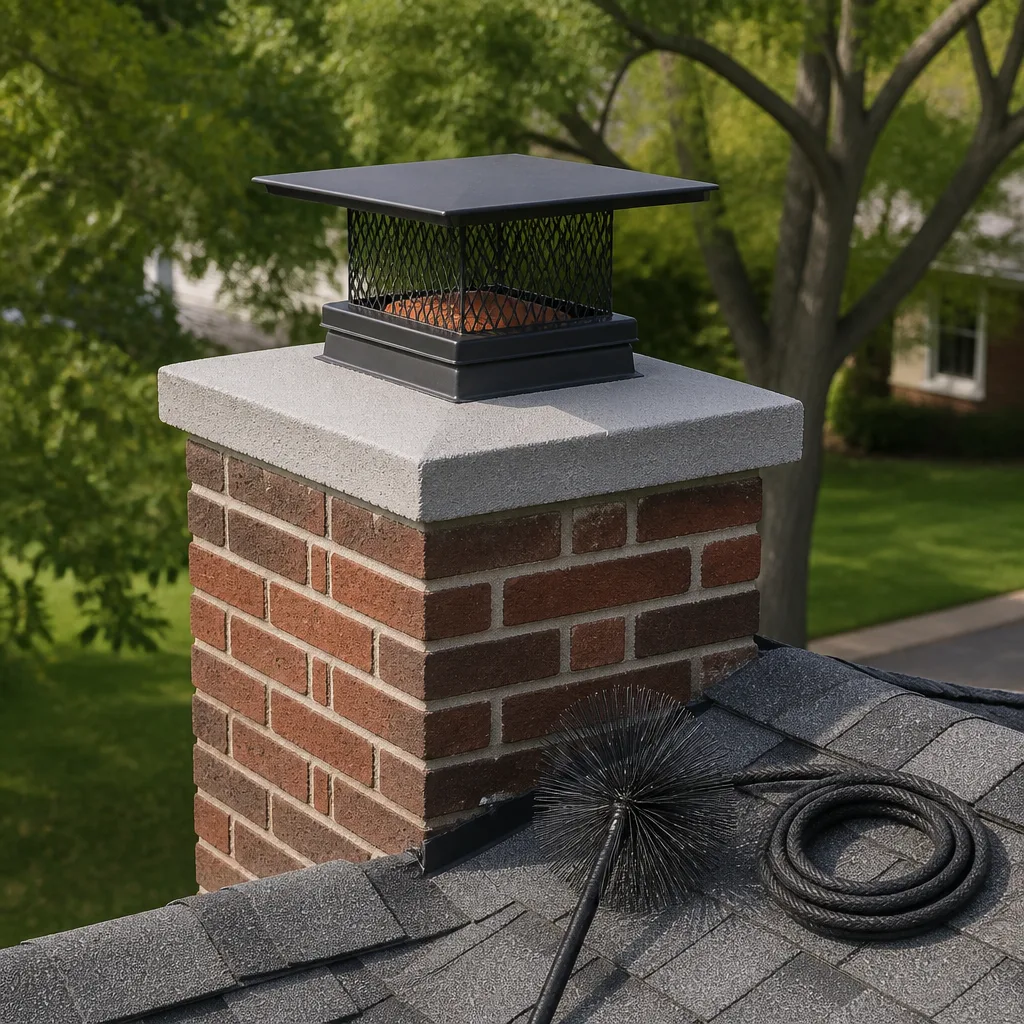
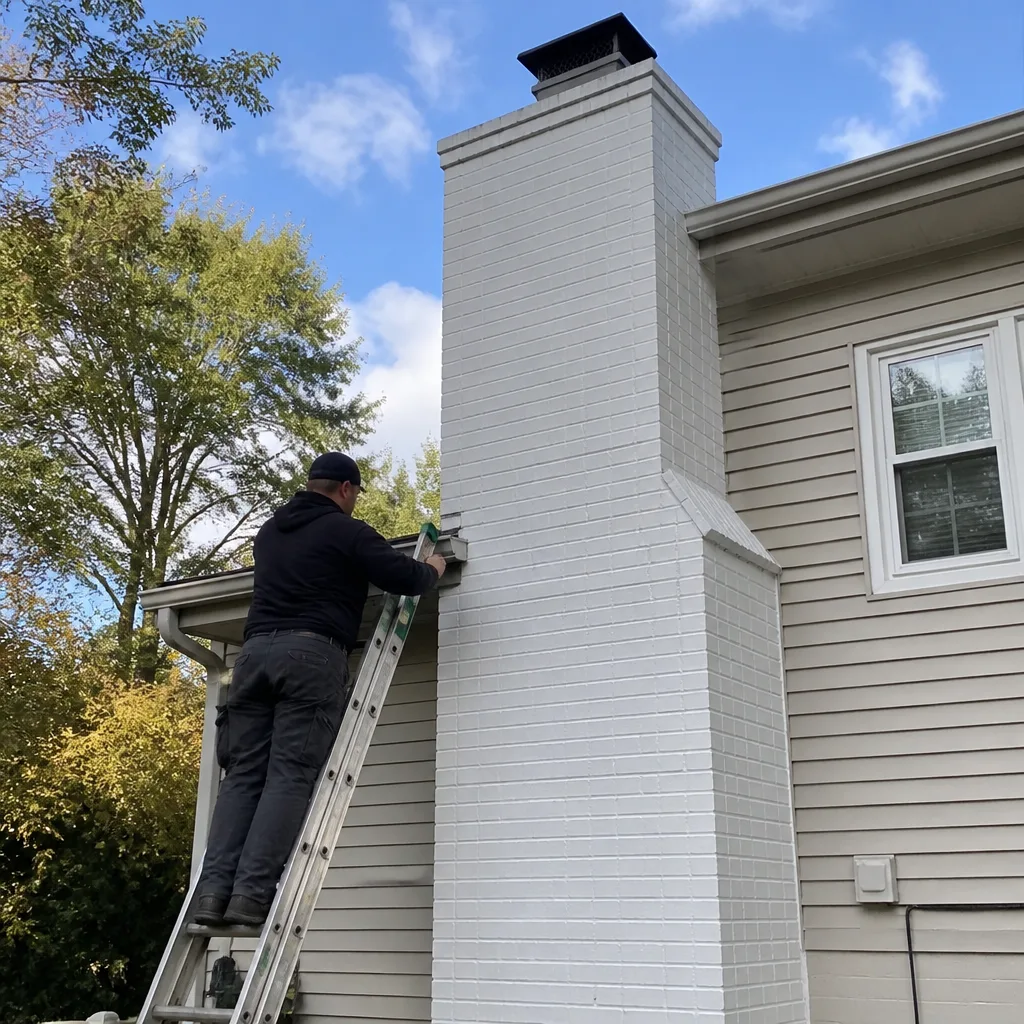
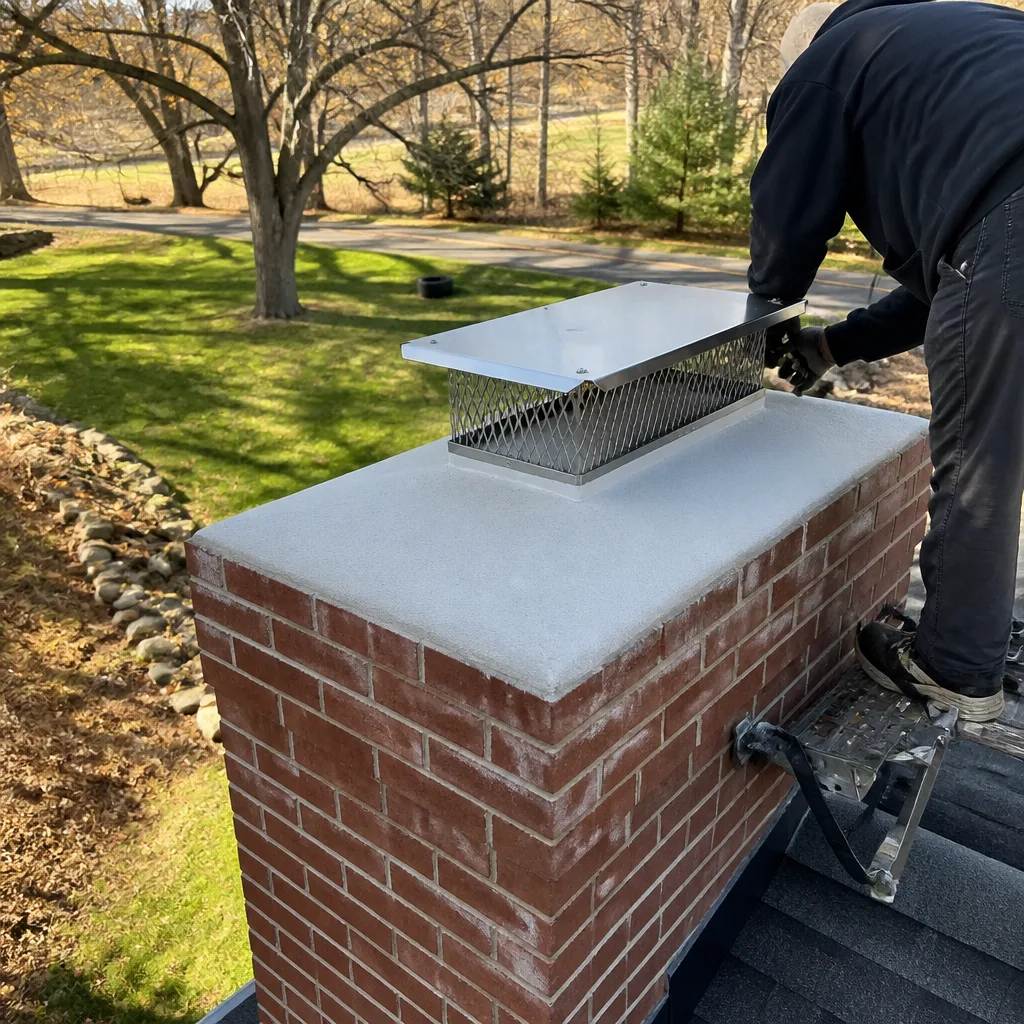
Level 1 sweep and inspection to the NFPA 211 annual standard - flue, crown, cap, and flashing checked and photographed
Chimney sweep logs do not sweep chimneys. They loosen some creosote - which then falls where a brush and vacuum still have to collect it.
 Before
 After
After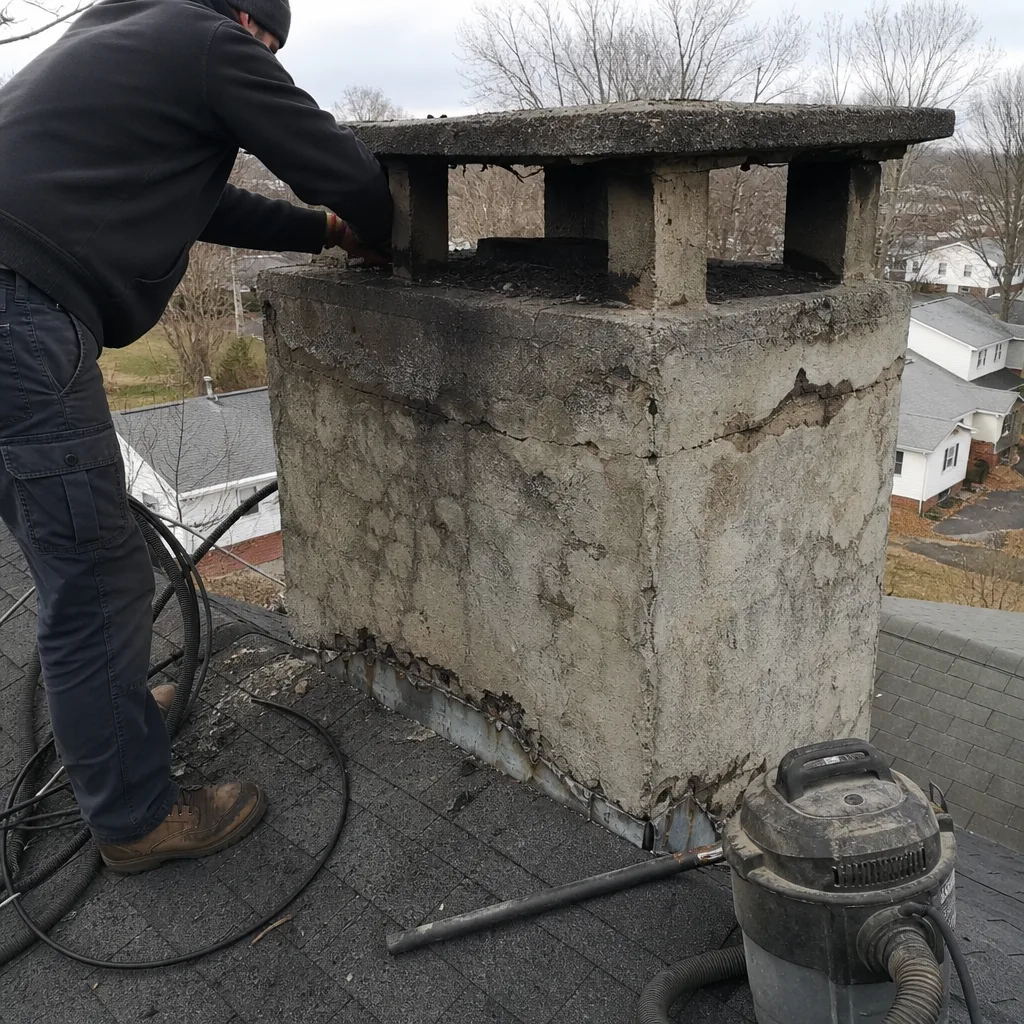 Before
 After
After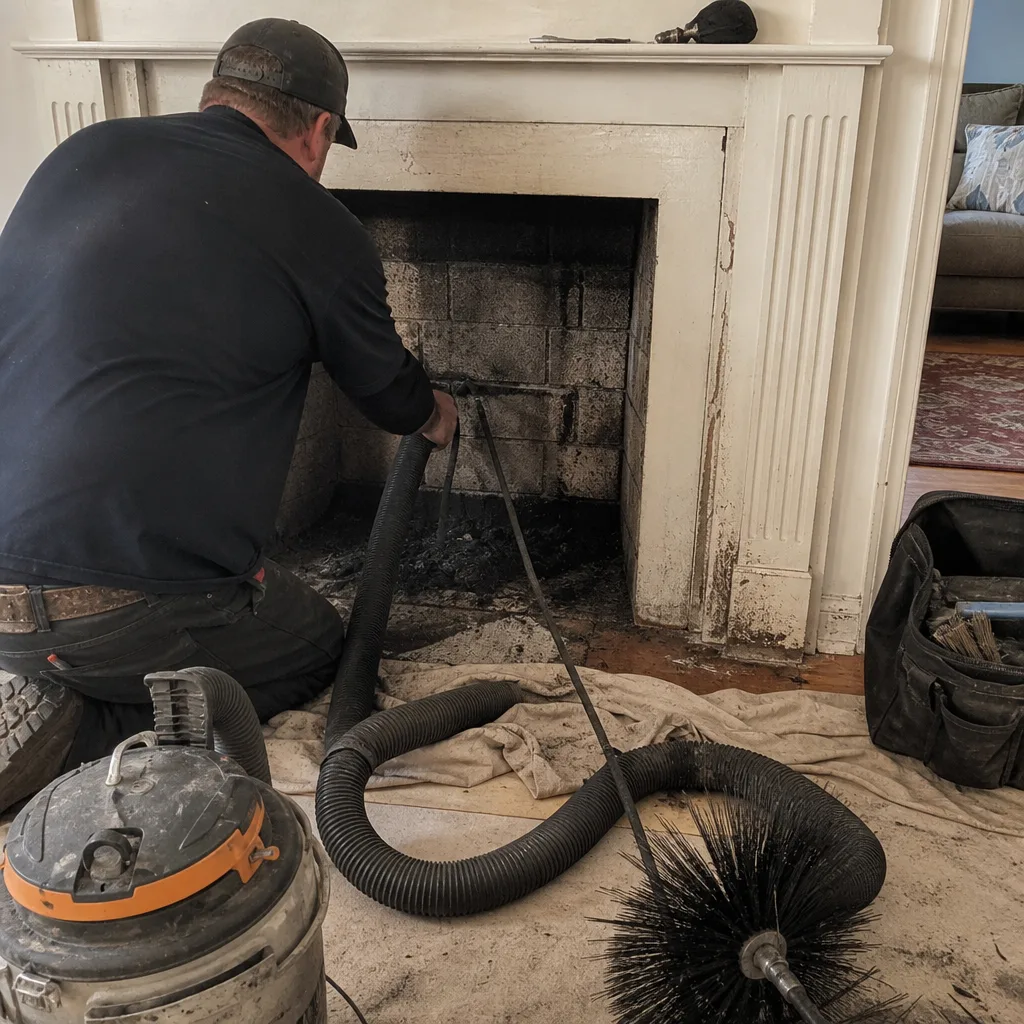 Before
 After
AfterCreosote Removal in Lynchburg, VA
Creosote removal in Lynchburg typically runs between $150 and $600 depending on how severely it has built up, and most jobs are finished in a single visit by one of our uniformed technicians. If your fireplace smells like a campfire in July, your damper is coated in a dark, tar-like crust, or you haven’t had a Chimney Cleaning & Sweep in more than a season, you likely have creosote that needs to come out before you light another fire. Hearthstone Chimney Co. has been handling this work in Lynchburg since 1984 – over 42 years of chimneys, and we have yet to find a creosote problem we couldn’t resolve safely and plainly.
Creosote is the byproduct of incomplete combustion. Every fire leaves some behind. Burn green wood, keep fires smoldering rather than hot, or go a few seasons without a sweep, and it layers up fast. At its worst – what chimney professionals call Stage 3 – it turns into a glazed, rock-hard coating that is genuinely difficult to remove and genuinely dangerous to ignore. A chimney fire burns at temperatures that can crack flue tiles and damage your home’s structure. This isn’t a scare tactic; it’s physics.
Our Chimney Cleaning & Sweep in Lynchburg service includes a creosote assessment on every visit, and when removal is needed, we tell you plainly what stage you’re dealing with, what it will take to fix it, and what it will cost – before we start. No surprises on the bill is not a slogan here; it’s how we have operated since Russell Haines founded this company. Call us at (540) 328-6986 and a live person will answer, day or night.
When You Need Creosote Removal
- You notice a persistent smoke or asphalt smell inside the house, even when no fire is burning. In Lynchburg’s humid summers, Stage 2 and Stage 3 creosote off-gases through the flue and into living spaces. Homeowners in Boonsboro and Rivermont often call us about this in August, thinking they have an odor problem when they actually have a buildup problem.
- You can see dark, shiny, or tar-like deposits on the damper or the firebox walls. A thin, gray-brown powder is Stage 1 and clears with a standard sweep. A flaky, brown-black layer is Stage 2. A hard, glazed, almost varnish-like coating is Stage 3 and requires chemical treatment before mechanical removal – do not skip that step.
- You’ve been burning unseasoned or green firewood. Lynchburg sits at the edge of the Blue Ridge foothills, and a lot of homeowners cut their own wood or buy it roadside. Green wood burns cool and wet, which is the fastest path to heavy creosote accumulation regardless of how often you use the fireplace.
- You haven’t had a chimney sweep in two or more years. The National Fire Protection Association recommends an annual inspection and cleaning. Two full burning seasons without one – common in older Forest and Wyndhurst homes with well-used fireplaces – is enough time for Stage 2 buildup to develop in a regularly used flue.
- Your fires are sluggish or smoke is backing up into the room. Heavy creosote narrows the flue’s effective diameter, restricts airflow, and makes draft problems worse. If you’re fighting smoke in your living room and nothing has changed about how you build a fire, the flue is telling you something.
- You had a chimney fire – or think you might have had one. A chimney fire doesn’t always announce itself with a roar. Sometimes it’s a popping sound and a smell. After any suspected chimney fire, a Level 2 camera inspection is required before the fireplace is used again, and any remaining creosote must come out completely. We see this situation regularly in older Lynchburg homes with masonry chimneys built before modern liner standards.
Our Creosote Removal Process
- Camera inspection before we touch anything. We run a Level 2 camera inspection of the full flue from crown to firebox. You see the photos. We give you a plain-English verdict: what stage the creosote is, whether there’s any liner damage, and exactly what the removal plan looks like. Documenting the before condition protects you and keeps us honest.
- Stage assessment and chemical pre-treatment if needed. Stage 1 creosote comes out with rotary brush work. Stage 2 benefits from a dry-applied chemical treatment that breaks down the flaky layers before we sweep. Stage 3 – the glazed, hardened variety – requires a dedicated chemical modifier like those used with Copperfield rotary systems; we apply it, let it work, and schedule the mechanical removal at the follow-up visit. Skipping chemical pre-treatment on Stage 3 and going straight to brushing is one of the most common mistakes we see from less experienced operators, and it doesn’t fully clear the problem.
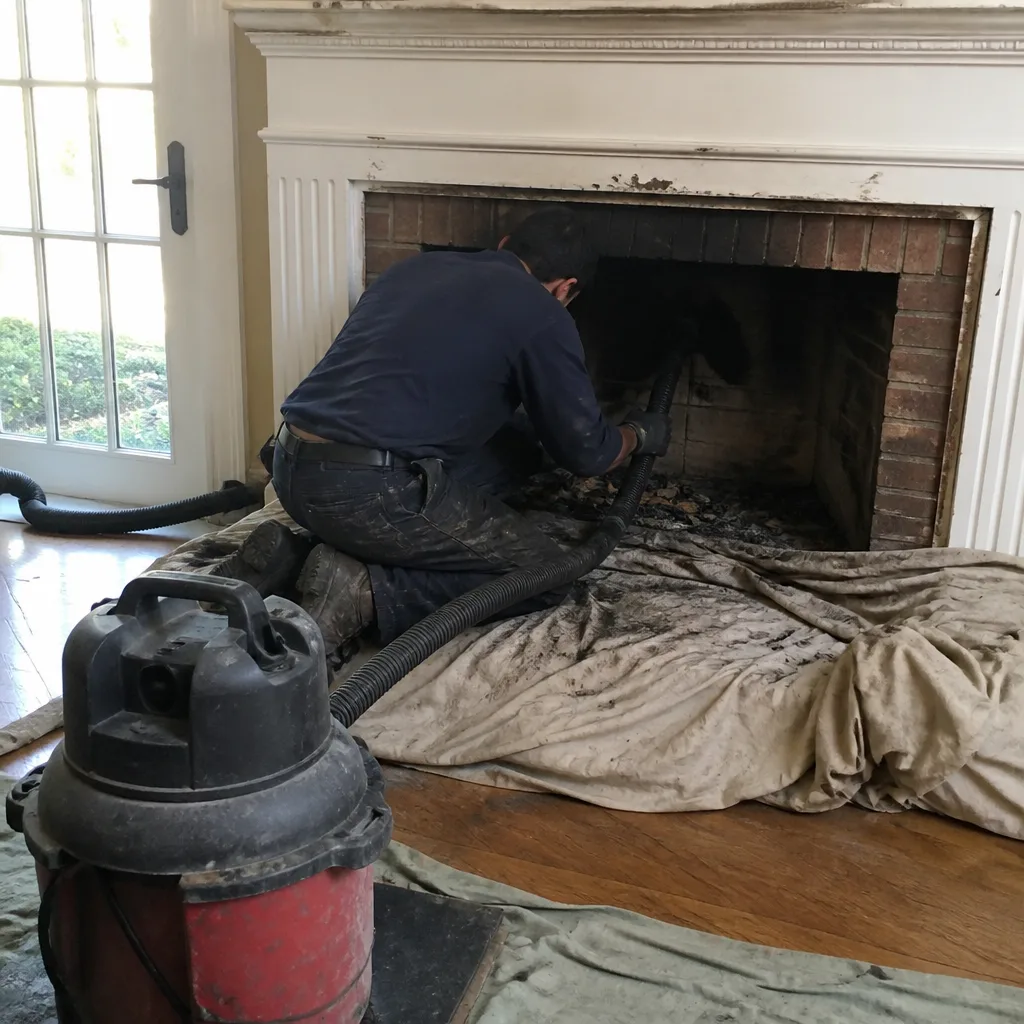
- Mechanical sweep with professional-grade equipment. We use rotary cleaning systems and chimney brushes sized precisely to your flue – round, square, or rectangular, terra cotta or stainless liner. Drop cloths protect your hearth and flooring. High-vacuum containment catches the debris at the firebox so your living room stays clean.
- Firebox and smoke chamber cleaning. The smoke chamber – the sloped area just above the firebox – collects creosote too, and it’s often overlooked. We clean it as part of every removal job, not as an add-on.
- Post-removal camera verification. Once we’re done, we run the camera again. You see the after photos side by side with the before photos. A clean flue looks unmistakably different, and we want you to see that difference rather than just take our word for it.
- Written summary and honest next-step recommendations. If we find a cracked tile, a failing flue liner, or a deteriorating crown during the inspection, we tell you – with photos, with plain language, and with a written estimate if repair is warranted. We don’t manufacture urgency. If something can wait a season safely, we say so. If it can’t, we say that too.
Creosote Removal Pricing in Lynchburg
Creosote removal in Lynchburg costs more than a routine sweep because the work is more involved – more time, more specialized equipment, and sometimes multiple visits for severe Stage 3 cases. Here are honest ranges based on what we see in this market.
| Creosote Stage | Typical Price Range | Notes |
|---|---|---|
| Stage 1 (powder/light buildup) | $150 – $250 | Included in standard annual sweep pricing in most cases |
| Stage 2 (flaky, layered buildup) | $250 – $400 | Chemical pre-treatment plus mechanical sweep; single visit |
| Stage 3 (glazed/hardened) | $400 – $600+ | Chemical modifier application, follow-up sweep; may require two visits |
A few things affect where your job falls in those ranges: flue height and configuration (taller chimneys in older Victorian-era homes near Federal Hill take more time), whether a liner inspection reveals additional issues, and whether Stage 3 buildup requires more than one chemical treatment cycle. We’ll tell you upfront which situation you’re in.
If you’ve received a written estimate elsewhere and want a second set of eyes on it, our Free Second Opinion costs you nothing. We look at the other company’s paperwork, inspect the chimney ourselves, and tell you plainly whether the scope and price are fair. No pressure, no obligation.
We also offer $50 off any repair over $250, a permanent 5% discount for seniors and veterans, and an $89 Seasonal Tune-Up that covers a standard Fireplace Cleaning and inspection for chimneys that are in good working order. Every job – every single one – is covered by our 90-Day Done Right Promise: if the work isn’t right, we come back and make it right, in writing, with no arguing and no paperwork runaround.
Call (540) 328-6986 for an exact quote. Estimates are free, and someone will answer when you call.
FAQs – Creosote Removal
How dangerous is creosote buildup, and do I need to stop using my fireplace?
Stage 1 creosote is a maintenance issue, not an emergency – you can continue using the fireplace but should schedule a sweep before the next heavy-use season. Stage 2 warrants prompt attention; use the fireplace sparingly until it’s cleared. Stage 3 is the one we’d ask you to stop burning with until the chimney is cleaned, because glazed creosote is highly flammable and a chimney fire at that stage can transfer heat to surrounding framing. If you’re not sure which stage you have, a Level 2 Inspection with camera will give you a definitive answer, not a guess. Call (540) 328-6986 and we can often schedule an inspection within a few days.
Can I remove creosote myself with one of the chimney-cleaning logs I see at the hardware store?
Chimney-cleaning logs work by releasing a chemical that makes Stage 2 creosote more brittle, which can help – but they are a supplement to professional sweeping, not a substitute for it. They don’t physically remove the creosote; they make it easier to sweep out. For Stage 3 buildup, they have limited effect. More to the point, they don’t inspect the flue for cracks, deteriorating mortar joints, or liner damage that a camera inspection would catch. We’re not dismissive of them as a between-service tool, but in Lynchburg’s market we see a fair number of homeowners who used cleaning logs for years and still had significant buildup because nothing was physically removed. For a definitive answer on what’s actually in your flue, call us at (540) 328-6986.
How often does creosote removal need to happen in Lynchburg specifically?
Once a year with a Level 1 Inspection is the standard for a regularly used fireplace, and it holds in Lynchburg just as it does anywhere else. That said, Lynchburg’s climate adds a wrinkle: cold snaps tend to arrive unevenly in the Blue Ridge foothills, which means a lot of homeowners here run intermittent, low-heat fires through October and November before settling into a regular burn pattern in December. Low, smoldering fires produce more creosote than hot, efficient fires, so if that describes how you use your fireplace, annual sweeping is more important than ever – not less. If you burn green or mixed wood from local sources, twice a year isn’t unreasonable. We’ll tell you honestly at the end of every visit what we found and how long you can reasonably go before the next one.
What happens if creosote removal reveals liner damage underneath?
This comes up more often than people expect, especially in Lynchburg homes built before the 1980s where the original clay tile liner has had decades of thermal cycling and, in some cases, a chimney fire or two that may have gone unnoticed. If our camera inspection shows cracked tiles, spalling, or open mortar joints in the liner, we document it with photos, explain what it means in plain terms, and give you a written estimate for repair before any further work proceeds. Liner repair options typically involve a HeatShield resurfacing system for minor cracks or a stainless steel relining using DuraFlex flexible liner for more significant damage. We don’t proceed to a repair you haven’t agreed to, and we don’t manufacture urgency about issues that can safely wait. If you want a second opinion on a liner diagnosis you’ve already received from another company, we offer that at no charge.
Why Lynchburg Homeowners Call Hearthstone
We have been in Lynchburg since 1984. That means we’ve worked on chimneys in Boonsboro and Rivermont, in older colonials near Randolph College, in brick ranchers in Timberlake, and in the newer construction out toward Wyndhurst. We know how chimneys in this part of Virginia age – what clay tile liners look like after forty years of seasonal use, how Lynchburg’s clay-heavy soil affects foundation movement and the mortar joints on older masonry chimneys, and why the combination of Blue Ridge cold snaps and locally cut hardwood tends to produce faster-than-average creosote accumulation in households that bank their fires overnight.
Russell Haines has led this company through four decades of that work. Our technicians are background-checked, they show up in uniform, and they treat your home the way you’d want a craftsman to treat it – carefully, cleanly, and without inventing problems that aren’t there. When you call, a live person answers. When we give you a price, that’s the price. When we say the job is done, we back it with the 90-Day Done Right Promise in writing.
Creosote removal is one of those jobs that matters a lot more than most homeowners realize until something goes wrong. We’d rather you call us before that happens. Our full home page has more information about everything we do, and we’re easy to reach at (540) 328-6986 any time you’re ready to schedule.
Written by Russell Haines, Owner at Hearthstone Chimney Co., serving Lynchburg since 1984.